Skip to content Skip to navigation

University of West Georgia Campus Plan Update 2025

The University of West Georgia, a charter member of the University System of Georgia, is a comprehensive, residential institution providing selectively focused undergraduate and graduate education primarily in the West Georgia region. The University is also committed to regional outreach through a collaborative network of external degree centers, course offerings at off-campus sites, and an extensive continuing education program for personal and professional development. Intellectual and personal development opportunities provide quality teaching, scholarly inquiry, creative endeavor, and service for the public good. 

The University of West Georgia has 117 active programs of study, including nine certificates of less than one year, four Nexus, 48 at the bachelor’s level, 33 at the master’s and specialist levels, five at the doctoral level, and 18 at the advanced certificate level (Fall 2024).  The university conferred 3,372 degrees and awards in fiscal year 2024, which includes 34 second majors on degrees conferred. This is a 6.2% increase over the number awarded in fiscal year 2023 (3,175) and a 57.9% increase over the number awarded in fiscal year 2012 (2,136), the baseline year for the Complete College Georgia initiative.

There were 14,394 students enrolled in Fall 2024: 9,157 at the undergraduate level and 5,237 at the graduate level. Overall enrollment at UWG has grown 12.7% since the Fall 2023 UWG has a diverse student population: 52.61% Caucasian, 29.92% African American/Black American, 8.08% Hispanic, 4.39% two or more races, 1.52% Asian, 1.89% did not declare any race, 0.14% American Indian/Alaskan Native, and 0.09% Native Hawaiian/Pacific Islander. 1.36% U.S. non-resident (formerly “non-resident alien”).  The student body is 68.4% female and 31.6% male (Fall Semester 2024).

Ninety-four (93.64%) percent of the student body was from Georgia and represented 152 counties. Carroll, Coweta, Douglas, Cobb, and Fulton were the counties with the largest student populations at UWG. There were 682 out-of-state students representing 40 of the 49 remaining states (plus Puerto Rico and Guam), Alabama, Florida, South Carolina, Tennessee, and California were the top states sending students to UWG. Additionally, there were 233 students from 54 countries. Nigeria, India, South Korea, and Mexico were the countries sending the largest number of students to UWG.*

The University of West Georgia has long been committed to providing students with access to college in the western region of the state and students from across the state of Georgia and the nation. Student success is at the center of UWG’s 2021 Strategic Plan, which advances UWG’s Momentum work by prioritizing essential elements in developing student success: a growth mindset focused on a stronger sense of purpose and belonging through engaged mentoring and extra-curricular involvement; experiential / applied learning through High Impact Practices (HIPs) and co-curricular experiences that are connected to students’ future personal aspiration and professional goals; and stronger alignment and coordination of student support–inside and outside of the classroom–to strengthen recruitment, retention, and graduation. The strategic plan is also aligned with UWG’s proposed Quality Enhancement Plan (Career Readiness through Experiential Learning), which began implementation in 2025.  Through the strategic planning process, the university has identified and is now implementing high-impact strategies aligned to USG Momentum to help students successfully obtain a degree. In the following report, these student success strategies are described.**

* Updates based on Fall 2024 enrollment.

**The counts provided are based on the geographic ORIGIN variable in banner as of Fall 2024 census date. This information may differ from variables related to tuition, waivers, residency or citizenship.

Current USG Sector & Peer Institutions

The University System of Georgia (USG) Research and Policy Analysis (RPA), in cooperation with the National Center for Higher Education Management Systems (NCHEMS), devised the methodology and established parameters for clustering IPEDS data for the selection of comparator Peer Institutions for all USG institutions. As a result of this process, UWG identified fifteen (15) peer institutions, as required. The UWG Key Performance Indicators (KPIs) team further refined the initial list of institutions. The selections were reviewed and approved by the UWG President, Research and Policy Analysis at the USG Office and subsequently approved by the USG Board of Regents. An updated list of UWG peer and aspirant institutions appears in alphabetical order below. The institutions benchmarked select Key Performance Indicators (KPIs) as UWG works to achieve the goals set forth in its strategic plan.

USG Sector Institutions

IPEDS ID

City

State

Georgia Southern University

139931

Statesboro

GA

Kennesaw State University

486840

Kennesaw

GA

Valdosta State University

141264

Valdosta

GA

Peer Institution

IPEDS ID

City

State

Central Connecticut State University

128771

New Britain

CT

CUNY Lehman College

190637

Bronx

NY

Eastern Kentucky University

156620

Richmond

KY

Eastern Washington University

235097

Cheney

WA

Kean University

185262

Union

NJ

Radford University

233277

Radford

VA

Southern Illinois University-Edwardsville

149231

Edwardsville

IL

East Texas A & M University

224554

Commerce

TX

The University of West Florida

138354

Pensacola

FL

Troy University

102368

Troy

AL

University of Central Missouri

176965

Warrensburg

MO

University of Northern Colorado

127741

Greeley

CO

2025 UWG Momentum Planning Process Timeline

The University of West Georgia’s development of the 2025 Momentum Plan was organized around the following strategic actions: 1) In December 2024, the Momentum Council considered specific campus priorities for the 2025 Momentum planning cycle. The council recommended that the 2025 Momentum plan focus on actions that would align with UWG’s National Institute for Student Success (NISS) priorities. 2) The Momentum Council coordinated with the Office of the Provost to identify members of the 2025 campus planning team. The planning team included 35 administrative leaders, staff, and faculty from across academic and student support divisions (Appendix I). Campus planning team members participated in the virtual panel sessions during the live USG Virtual Sessions week in preparation for the campus planning symposium. 3) The campus planning symposium was held on March 4, 2025 (Appendix II). The team members utilized the information from the MomentumU course, the live virtual sessions, and the planning team presentations to identify student success priorities for the 2025 campus plan. Jonathan Hull, USG Associate Vice Chancellor for Faculty Development and Student Success, participated in the campus planning session. A summary / overview of the campus planning team recommendations can be found in Appendix III. The Momentum Council uses these recommendations in the development of other action priorities for the next academic year. 4) The Momentum Council drafted the 2025 Momentum plan with feedback from the campus planning team and the provost. UWG’s Momentum Plan was submitted to the USG in April. UWG’s assessment of its student success actions and processes for 2024-2025 is included in Appendix IV.

Student Success Priorities

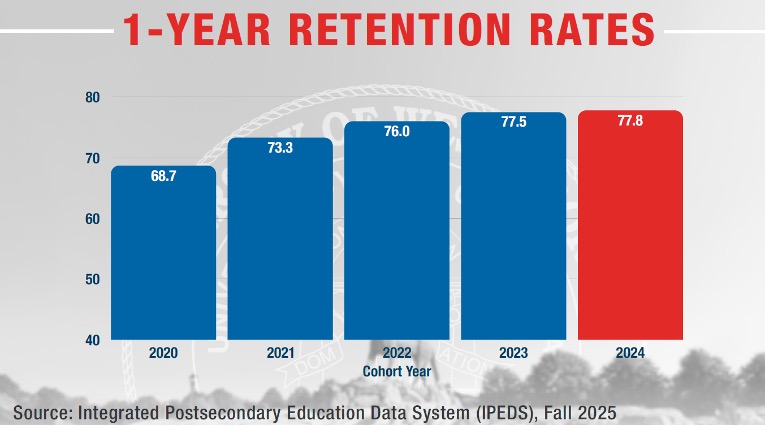
2025 UWG Student Success Achievements: In August, UWG welcomed its nineth president, Michael Johnson, to campus. President Johnson has outlined several important institutional priorities; however, student success has been his major focus, emphasizing increases in student progression, graduation rates, and a vibrant, on-campus culture. UWG is positioned well to meet these challenges. In Fall 2025, UWG’s student enrollment grew to 16,072 students—an institutional record and a 26% increase since 2021 (12,718). This growth is evident at all institutional levels, including dual enrollment (2,048—a 122% increase since 2021). Other positive indicators aligned with UWG’s Momentum and student success priorities include an increase in first-year retention (78.8%--up from 68.7% in 2020), an increase in degrees conferred (4,453—up from 2,915 in 2021), an overall increase in six-year graduation rates, including an increase for PELL eligible students (45.7%), an increase in attempted and earned credit hours by first-year students, and an increase in on-campus housing occupancy (72.4%--up from 64.5% in 2021). External measures of UWG’s student success achievements include its intuitional ranking (#203) in the U.S. News & World Report (2026 National Universities) and its national ranking on social mobility (#87), which is second highest among all USG institutions and highest among all USG Regional Comprehensive Universities (U.S. News & World Report, 2026 Top Performers in Social Mobility). These positive achievements are the result, in part, of UWG’s Momentum and ASPIRE priorities, which elevate student success as an institutional cornerstone. The updates on UWG’s Momentum and ASPIRE priorities that follow reflect this ongoing work to support student learning, graduation, and professional achievement.
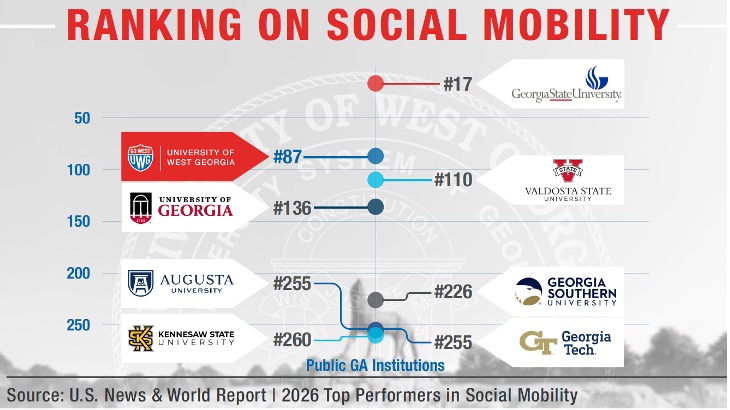
UWG Social Mobility Ranking

2025-2026 Momentum Plan: UWG’s 2025-2026 Momentum Plan focused on alignment with and support of UWG’s National Institute for Student Success (NISS) Initiatives. In addition to continuing its work to support and evaluate UWG’s core Momentum priorities (Focus Areas, Core English & Math, Credit Hour Completion, Corequisite Learning Support, etc.), the Momentum Council has engaged in conversations with campus partners about how UWG’s four major student success priorities are purposely aligned and coordinated. The infographic below outlines the relationships between USG Momentum, NISS, UWG QEP, and ASPIRE.  
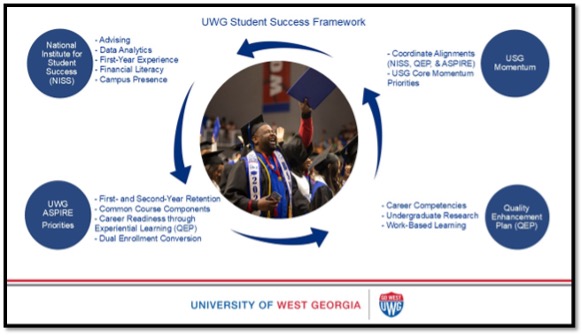
UWG Student Success Framework

UWG NISS Strategic Goals:

• Empower academic and student affairs to make proactive data-informed decisions

• Strengthen and scale structured pathways to include summer success programs and first-year structure

• Coordinate student support efforts across campus and systemize early alerts, program maps, and other technologies (high level of advising care)

• Provide proactive outreach to students to strengthen financial aid and wellness

• Boost campus presence and promote in-person student engagement
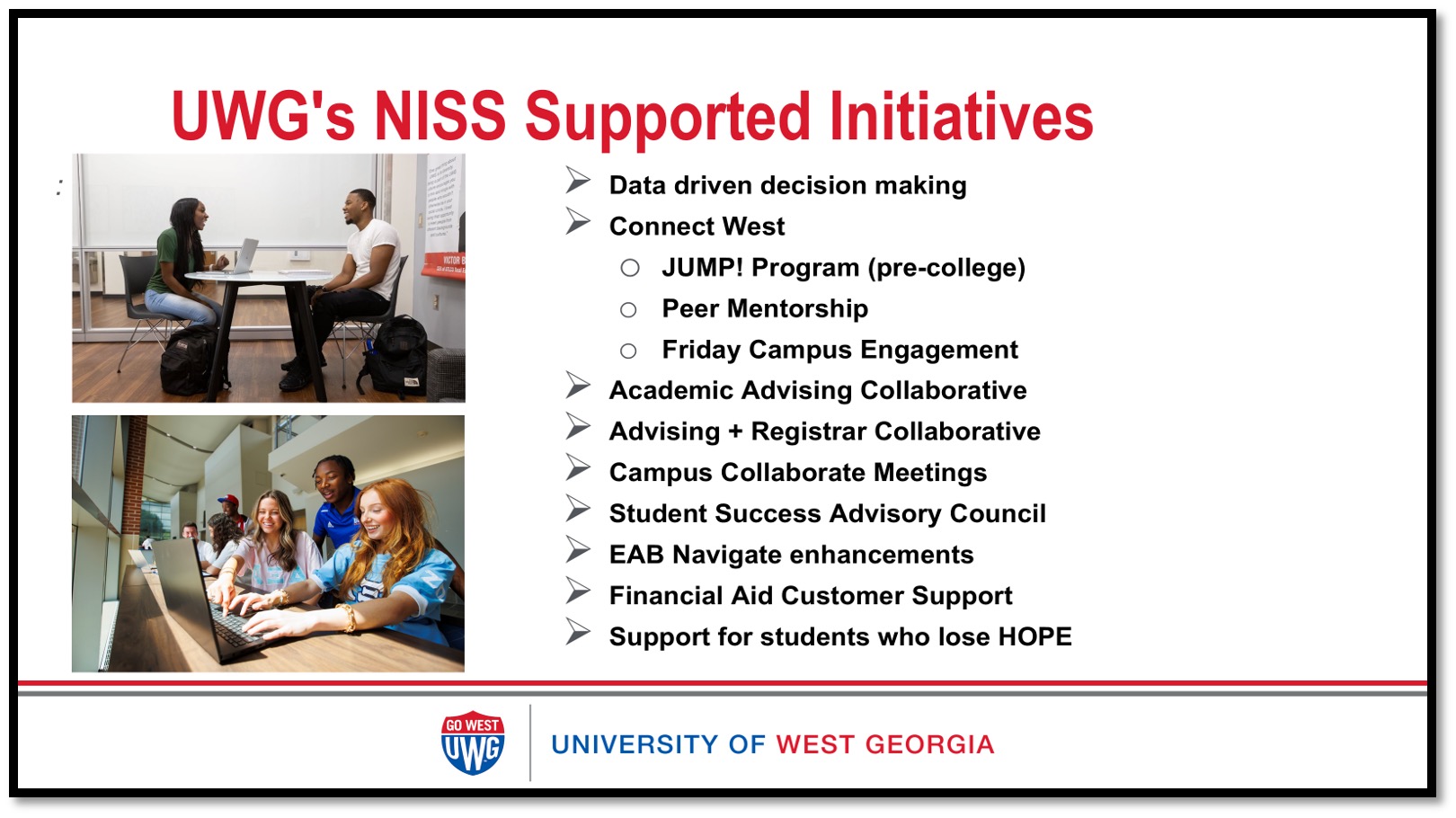
NISS_Supported_Inititatives

Momentum Priority Action 1: Proactive Data-Informed Decisions

Strategy: Empower academic and student affairs to make proactive data-informed decisions.

Update: Proactive, data-informed decision-making at UWG is driving institutional improvements through cross-divisional collaboration and enhanced data infrastructure. Student success data analysts are supporting units such as Greek Life, housing, and student engagement with timely insights, while tools like a course prediction model and a faculty workload dashboard are guiding Academic Affairs in more effective course scheduling. These efforts are complemented by in-person sessions for academic leadership to review and utilize these models. In addition, the development of a comprehensive data dictionary and strategies for data warehousing and reporting are promoting consistency and long-term scalability. Institutional decisions, such as evaluating changes to admissions GPA requirements, targeting graduation rate improvements, and predicting student progression, are being guided by data in impactful and strategic ways.

Momentum Priority Action 2: Strengthen First Year Pathways  

Strategy: Strengthen and scale structured pathways to include summer success programs and first-year structure.

Update: UWG has taken several strategic steps to strengthen first-year pathways and enhance the overall first-year experience. Much of the work on first-year pathways and institutional support for students is described in more detail in other sections of this report, including the following key strategies:

  • Advanced course scheduling in the first semester, which has been in place for several years, is being extended to the second semester. This focus helps strengthen students’ ability to attempt and complete first-year English and Math and attempt / complete 30 hours in the first year.
  • Faculty review of corequisite learning support courses in English and Math to improve student progress and completion of core English and Math. This includes a new proposed survey of first-year students to better determine which students might need corequisite courses based on mindset evidence.
  • Offering more First-Year Cornerstone Seminars so that more students have the opportunity to take the seminar in the first semester. In Fall 2025 the number increased to 43 sections offered (775 students enrolled the seminar connects academic topics with opportunities for students to engage in academic mindset assessment and major and career exploration.
  • A review of Academic Focus Areas to assess how these support students who are uncertain about their major or future career. For example, surveys and direct interviews with students in UWG’s Health Professions Focus Area resulted in changes to the program map for the Health Professions focus area. New focus areas in Communications, Film, and Media and in Pre-Engineering are proposed for next year. 

In addition to the ongoing strategies that are connected to USG Momentum, UWG also implemented actions this year that were specific to its NISS-aligned work.

The summer pre-college summer JUMP! Program, developed in partnership with University College and Student Affairs, welcomed 66 students back to campus early for academic and student life programming centered on college readiness and connection. JUMP! is UWG’s alternative to the traditional Summer Bridge Program. It provides students with an opportunity to return to campus early and participate in academic and student programming with a focus on college readiness. UWG’s goal is to increase the number of students participating in JUMP and to improve their experience based on feedback from last year.  

Additional efforts include the launch of the Connect West Experience, designed to support first-year and first-generation college students through campus engagement and peer mentorship. The peer mentoring program currently serves 50 mentees and mentors, helping to foster a sense of belonging and community from the outset of students' academic journeys. Student Success is also collaborating with University College to revive Phi Eta Sigma, an honor society for high-achieving freshmen. Originally chartered at UWG in 1973 and inactive since 1994, the reinstatement of this chapter reflects a renewed commitment to recognizing academic excellence and supporting student success in the first year.

Momentum Priority Action 3: Proactive Advising Strategies 

Strategy: Coordinate student support efforts across campus and systemize early alerts, program maps, and other technologies (high level of advising care).

Update: UWG is actively collaborating with academic partners to strengthen advising strategies and improve student engagement and retention. In partnership with NISS, proactive advising campaigns and conversations are being developed to support student success. One such campaign focused on increasing MWF campus engagement and improving retention by ensuring that first-time, full-time Fall 2025 students living in residence halls were enrolled in at least three MWF courses for Spring 2026. This initiative required coordinated efforts with the Office of Student Accounts and Billing to assist students with outstanding fees, and with Health Services to resolve immunization holds that could hinder registration. As a result, 847 students were enrolled.

Academic Advising Collaborative (ACC): As part of its NISS initiatives, UWG established in 2025-2026 the Academic Advising Collaborative, a cross-functional group of academic advisors, faculty, and administrators committed to improving advising practices, policies, and student support services across multiple colleges and schools. UWG began this initiative in mid-April and spent the summer meeting with Deans from each college to identify student barriers, course bottlenecks, curriculum concerns, and other challenges impacting student success. These conversations proved highly productive, allowing us to strengthen existing partnerships, repair strained relationships, and build new connections between advising and academic leadership. The meetings also created space for open dialogue, resulting in a clearer understanding of shared challenges and opportunities for collaboration. The AAC hosted annual college meetings with advising teams, academic leadership, and Student Success to identify and address the specific challenges faced by each college’s student population. All college meetings were completed by the end of July, and UWG plans to continue hosting these meetings annually to discuss student challenges specific to each college in collaboration with college leadership, Advising, and Student Success.

Advising + Registrar Collaborative: UWG also established an advising and registrar partnership this year to utilize data to address challenges and barriers faced by students by strengthening academic guidance, enhancing advising, and streamlining enrollment processes in support of student success. This partnership has proven to be highly effective, fostering consistent and open communication between our teams. Through this collaboration, UWG has been able to address challenges, develop solutions, and improve processes that benefit Registrar staff, advising staff, and, most importantly, our students. The collaborative meets regularly to maintain progress and ensure ongoing improvements. Looking ahead, UWG will enhance its EAB Navigate platform by integrating it with D2L, enabling advisors to more easily identify at-risk students and provide timely, targeted interventions to support academic success and retention.

Additional updates on UWG Advising can be found in Section IV.5 (Advising) below.

Momentum Priority Action 4: Proactive Outreach for Financial Aid and Wellness

Strategy: Provide proactive outreach to students to strengthen financial aid and wellness.

Updates: In response to the new SACSCOC recommendation for institutions to provide guidance on student debt management, faculty from the Accounting and Economics departments in the Richards College of Business led financial literacy sessions during Orientation to equip students with essential knowledge for making informed financial decisions. UWG is also developing programming to support students who lost the HOPE Scholarship for the first time, aiming to help them regain eligibility by the next checkpoint. One such initiative under consideration is the Keep HOPE Alive program, which would provide both financial and academic support to students who lose HOPE after their first year. Additionally, Financial Aid and the Center for Academic Success have partnered on proactive outreach, using early alerts issued at the start of the semester to identify students at risk of losing financial aid and connect them with timely resources.

University Advising at UWG has launched an initiative to strengthen academic advisors’ financial aid literacy, with the goal of better supporting students through closer collaboration with the Office of Financial Aid. We are partnering with ITS and EAB to ensure that students’ SAP (Satisfactory Academic Progress) status is easily accessible to advisors. With this information, advisors can proactively identify students who may be at risk of losing financial aid and provide timely guidance. Advisors are also gaining a deeper understanding of SAP policies, which allows them to coach students on how academic outcomes—such as receiving a “W” or an “F”—can affect their eligibility. Many students are unaware of these implications, and by increasing awareness through advising, we aim to help more students maintain their aid, stay enrolled, and successfully progress toward graduation. This work aligns with Momentum Priorities #3 and #4.

To further enhance financial aid support and access, UWG partnered with EdAmerica in June 2025 to manage inbound call support for the Financial Aid phone line. This strategic move allowed the Student Solutions team to redirect its focus toward proactive student success initiatives while improving service quality. As a result, call volume capacity more than doubled by August, greatly expanding access for students seeking assistance. Average response times improved by up to 71%, significantly reducing wait times, and call abandonment rates dropped by as much as 76%, indicating stronger engagement and more effective issue resolution.

Momentum Priority Action 5: Support and Enhance Campus Presence Experience for Students through Placemaking & Belonging

Strategy: Boost campus presence and promote in-person student engagement

Update: While not originally included in the NISS outcomes, UWG added a goal focused on increasing campus presence and fostering in-person student engagement to strengthen the overall student experience. As seen in other NISS initiatives, we implemented proactive advising strategies and introduced MWF course schedules that included intentional afternoon programming—including on Fridays--with events sponsored by Academic Affairs and Student Affairs to encourage students to remain on campus and engage with the community.

On-Campus Courses: Over the past two years, academic programs have been committed to increasing the number of in-person classes offered on campus at UWG. As with many colleges and universities, online courses increased during COVID, and now UWG is committed to helping students return to the on-campus residential experience that distinguishes UWG. This initiative has yielded positive results with a 24.8% increase:

Fall 2024

Fall 2025

F2F Carrollton campus sections: 608

F2F Carrollton campus sections: 753

F2F Carrollton campus seats filled: 11550

F2F Carrollton campus seats filled: 14421

UWG also took steps to improve campus wayfinding by creating student-centric zones and enhancing signage and navigation tools. These changes reduce stress for students and help foster a greater sense of belonging across campus.

Standardized Course Schedules: UWG identified inconsistencies in course scheduling as a barrier to student success, especially for students who are navigating between classes on campus. Depending on the day of the week, classes started at different times. This often meant that students had difficulty getting from one class to another or students were unable to enroll in a course because it conflicts with the start/conclusion of another course. Course scheduling is complicated because of accreditation and course requirements in different colleges and schools. UWG established a scheduling task force in 2024 that consisted of representatives from the colleges and schools, faculty senate representatives, and university leaders. The task force surveyed both faculty and students to get input for both scheduling needs and interests. In Fall 2024, the task group presented recommendations to the faculty senate, which included new scheduling templates. The purpose of the scheduling revisions is to reduce the number of start times, align start times, and mitigate class time conflicts. The new course schedule was approved was implemented in Fall 2025.
Success Inventory

ASPIRE Strategy I: Improve First-to-Second Year Undergraduate Retention (University of West Georgia-2025)

Strategy/Project Name: 
ASPIRE Strategy I: Improve First-to-Second Year Undergraduate Retention
Strategy/Project Description: 

Strategy: Through Momentum work, increased advising, enhanced supplemental instruction, and other activities, students will be supported and better informed of their status in classes and retained from first to second year at an increased rate.

Progress and Adjustments: 

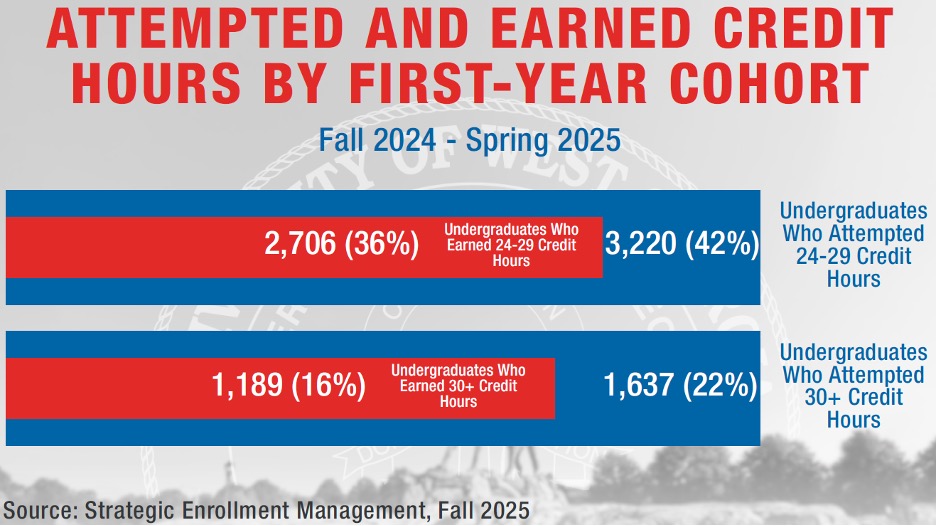
Updates: This ASPIRE strategy is aligned with UWG’s NISS Priority Action II  above and with institutional actions described in other sections of this report.  First-time, full-time (FTFT) first-to-second year retention rates continue to increase to 77.8% in 2024. In addition, fall to spring retention increased from Fall 2024 to Spring 2025 to 91.22%, up from 90.9% in 2024-2025. Attempted and earned credit hours by first-year students also increased.

UWG 1 Year Retention Rates

UWG Credit Hours Attempted and Earned

Aligned actions to support first- to second-year retention include ongoing NISS and Momentum projects on data-informed decisions, course prediction/scheduling, and UWG’s retention task force, on-campus engagement, focus areas, First-Year Seminars, second year support, first year onboarding, HOPE restoration (30 to 60 hour checkpoints), financial literacy, early alerts for financial aid issues, and JUMP!—UWG’s pre-college summer program.

ASPIRE Strategy II: Improved Consistency and Reliability of Academic Courses (University of West Georgia-2025)

Strategy/Project Name: 
ASPIRE Strategy II: Improved Consistency and Reliability of Academic Courses
Strategy/Project Description: 

Strategy: Utilizing the Common Course Components (CCC) model in D2L will ensure all students have day-one and ongoing access to course materials, including the syllabi, calendar, and assignment submission and feedback/assessment.

Summary of Activities: 

Background: In Fall 2023, the Provost encouraged faculty and academic support units to work toward improving students’ experience in CourseDen, UWG's branding of D2L / Brightspace Learning Management System (LMS), the web platform for courses, regardless of modality.  This initiative, Common Course Components (CCC), provides a consistent student experience and reduces students' cognitive and technical challenges when accessing different courses within CourseDen. The initiative also offers efficiencies to help faculty build out courses and move to online teaching in the case of emergency closings, building on what UWG learned during the COVID pandemic. The Institute for Faculty Excellence (IFE) and UWG Online (UWGO) have been collaborative leaders in this student success initiative. The IFE facilitated information sessions to help faculty understand the goal of incorporating common components in CourseDen for all courses, regardless of modality. The primary reason for asking faculty to organize their courses in a standardized format was to help students navigate their courses and provide students with a consistent online experience. The IFE has worked closely with the Faculty Senate’s Teaching, Learning, & Assessment Committee (TLAC) to identify best practices for the organization of courses in CourseDen. The committee members and other faculty designed their Spring 2023 courses to align with these recommendations and piloted courses that semester. They offered feedback to the IFE and the TLAC based on their students’ experiences. The IFE also surveyed UWG students to understand better what their expectations were regarding how their instructors used CourseDen and to learn which components were most supportive of their success. Nearly 1,000 students responded, and their responses helped inform new expectations for instructor usage of CourseDen. Throughout spring and summer semesters, the IFE offered support to faculty via hands-on workshops, on-demand videos, and written tutorials. The Office of the Provost requested that all Fall Semester 2023 LMS course sites include a Concourse syllabus, gradebook, and assessments (instructions, submission options, and feedback) when appropriate. The only exceptions to the CCC requirements are some clinical, internship, independent study, and directed reading courses which include some but not all of these required elements. Reports on tool usage were pulled from CourseDen and indicated a high compliance rate among instructors. In Fall 2023, UWGO, the IFE, TLAC, and the Office of the Provost continued to develop further expectations for faculty usage of CourseDen to align with student expectations and best practices for supporting student learning and success. 

Progress and Adjustments: 

Updates: As of Fall Semester 2025, the following Common Course Components have been accomplished:

  • Spring 2025: 92% of courses include all Common Course Components
  • Fall 2025: 97% of courses include all Common Course Components
  • All courses, regardless of modality, have a complete syllabus, due dates posted in the course calendar, a gradebook, and assessments (instructions, submission options, and feedback).
  • UWGO works with the deans to track courses and ensure CCCs are present and any approved exemptions documented.
  • New Intervention: UWGO, ITS, and the Provost’s office developed an initiative called NUDGE (Notifying Undergraduates of Due-dates and Grades Electronically) that includes two pilot tests (Spring and Fall 2025). The NUDGE framework is a low-cost strategy that boosts motivation, engagement, and performance by connecting friendly reminders connected to assignments in the LMS. Preliminary pilot studies results show the strategy increases the timeliness and quality of assignment submissions, improves grades, reduces cognitive fatigue, and fosters equitable, sustained engagement across diverse learning contexts. In Spring 2025, 37 Core IMPACT courses were enrolled in pilot; 1,300 students received email reminders about upcoming assignment due dates. In Fall 2025, the number Core IMPACT courses enrolled in pilot increased to 100; 3,800 students are receiving text reminders about upcoming assignment due dates
  • UWGO & IFE continue to promote our Knowledge Base tutorials and videos to support faculty as they build their courses.
  • UWGO is also supporting enhancements to the learning experience in CourseDen. In Spring 2025, CourseDen content was updated with features. The new content experience is designed to be more intuitive for instructors setting up their courses, and the organized structure is intended to improve student content navigation. Units (Modules) are color-coded to help create a visual connection between course materials. See CourseDen: New Content Experience  for an overview of the new features with links to additional resources.
  • UWGO has added a new section in the syllabus management system for AI policy. All faculty must select from 1 of 4 templates or create their own policy. The AI policies were developed and approved by the Faculty Senate.

ASPIRE Strategy III: Improve Career Readiness via Experiential Learning (University of West Georgia-2025)

Strategy/Project Name: 
ASPIRE Strategy III: Improve Career Readiness via Experiential Learning
Strategy/Project Description: 

Strategy: As part of UWG's Quality Enhancement Plan (QEP), UWG will increase the number of opportunities, awareness, and participation in experiential learning (multiple approaches including undergraduate research, study abroad, internships, etc.)

Summary of Activities: 

Background: UWG’s Quality Enhancement Plan (QEP—Career Readiness through Experiential Learning—seeks to strengthen the connection between experiential learning and the development of career readiness competencies for undergraduate students, beginning in their very first semester and continuing through their senior-level courses as they transition to their careers. Approved by SACSCOC in 2024 and officially launched in January 2025, the QEP will focuses on two types of experiential learning: undergraduate research and work-based learning.  The QEP supports  UWG’s current Strategic Plan, which aims to “launch or advance each student’s career before graduation” by providing students with access to high-quality experiential learning opportunities. The Strategic Plan further states that UWG will “define pathways to post-graduation through an institutional commitment to elevating and advancing internships, experiential learning, intentional mentorship, and professional and community-based networking for all students.” The QEP will bolster the institutional commitment referenced in the Strategic Plan while helping faculty, staff, and, most importantly, UWG’s undergraduate students recognize and value the connections between career readiness and experiential learning. UWG currently offers students an array of experiential learning opportunities in areas including, but not limited to, undergraduate research and creative inquiry, internships, work-based learning, and study abroad and study away. 

Career Readiness through Experiential Learning

QEP for UWG Students (Classrooms to Careers)

Evaluation/Assessment plan: 

QEP Impact on Student Learning: Ongoing Actions and Opportunities  

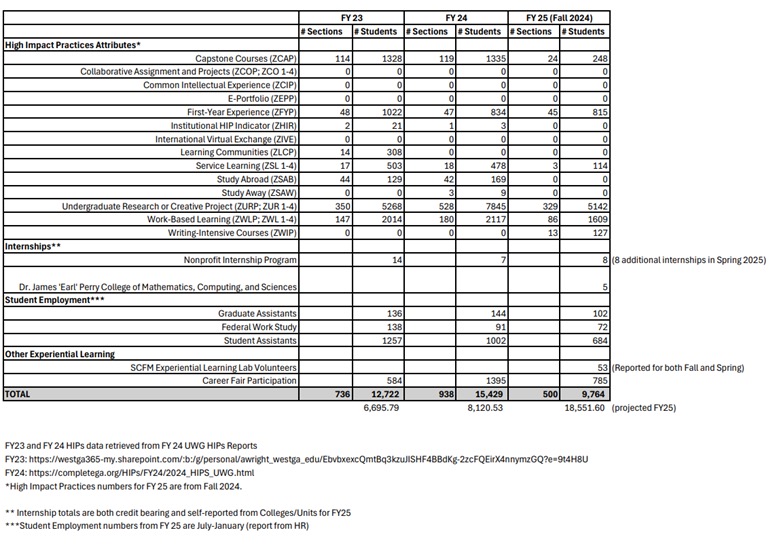
Creation of Experiential Learning Inventory: This inventory provides a standardized, centralized way to track all experiential learning activities within the schools and colleges. This inventory enables deans and administrators to document student participation in internships, field research, service-learning projects, and other real-world learning experiences efficiently (e.g. internships).

  • 11 units across campus provide information for the experiential learning inventory
    • 7 colleges and schools, in addition to Career Services, Human Resources, Registrar Data, and Business & Partnership Development
    • Data included in the chart below:

UWG HIPS Inventory

  1. Development of Career Readiness Modules: Wolves Ready to Work (current enrollment of 32 students) 
  2. Professional Development Opportunities: Number of QEP-related professional development opportunities for faculty and staff
  • Fall 2024: 80 Faculty attended the Faculty Kick-Off event at which the QEP was introduced as a model for enhancing career readiness across campus.
  • Spring 2025: Two opportunities provided since January 2025 for professional development, including QEP Kick Off (February), the QEP Summer Institute (June)
  • QEP Kick Off: 57 Faculty and staff representing six colleges/schools and multiple business units across campus
  • QEP Summer Institute: 6 faculty participants
  1. Increases in undergraduate research/creative projects and work-based learning opportunities:


Number of Undergraduate Research/Creative Projects HIP Designations and Work-Based Learning HIP Designations per College or School.

College or School

Fall

Spring

Total

College of Business

10

15

25

College of Education

27

23

50

College of Humanities, Arts, & Social Sciences

53

104

157

College of Mathematics, Computing, & Sciences

54

62

116

Honors College

 ----

5

5

No College Designated

6

 ----

6

School of Communication, Film, & Media

17

35

52

School of Nursing

12

9

21

University College

7

19

26

Totals

186

272

458

 
  1. The Institute for Faculty Excellence (IFE) partnered with the Richards College of Business to develop Richards EDGE –a dynamic, non-credit hour career readiness program designed to help their students build essential professional skills while earning digital badges that showcase their growth. 1,900 RCOB students enrolled in this pathway.
  2. The IFE and the Perry College of Mathematics, Computing, & Science developed an experiential learning course, designed to help students explore, engage, and reflect on a wide variety of experiential learning opportunities that will prepare them for future professions and careers. Students participate in hands-on experiences—from internships and service learning to research projects and creative endeavors—that help them discover their strengths, build essential skills, and connect their academic learning to real-world challenges. Students also utilize guided reflections on these experiences to deepen their understanding and articulate their growth. 1,400 CMCS students enrolled in this experiential learning pathway.
  3. Wolves Ready for Work is a brief yet impactful interactive online course designed to help students understand what professionalism truly looks like and how to apply it in real-world settings. The course includes six short topical modules, each focused on a key aspect of workplace readiness, and a concluding module about Career Service, and each module includes a quick assessment to reinforce the content covered. A final assessment at the end brings everything together. Faculty and staff who are leading internships or other career-related experiences can have their students enrolled in this course. Upon completion, students earn a certificate that can be included in their portfolios and shared with potential employers. 66 students are enrolled in Fall 2025 for the pilot. The project will target all capstones, internships, etc. in the spring.
Progress and Adjustments: 

QEP Updates: The first year of QEP implementation has yielded several demonstrable benefits that reflect both direct and indirect impact on institutional capacity and student learning:

  • Expanded awareness of experiential learning opportunities, with all colleges and schools engaged in the development of QEP-related initiatives, including the establishment of competency-based and/or experiential learning badging programs.
  • Documented increases in student participation in both internal and external internships.
  • Recognition of the institutional need to comprehensively document all experiential learning activities to ensure continuous improvement and enhanced accountability.
  • Expanded cross-campus collaboration to design and implement initiatives that cultivate career-ready competencies, including the development of an online training module to equip students with essential professional skills for workforce entry.
  • Development and dissemination of targeted campaigns to increase awareness and participation among students, faculty, and staff across all levels, with messaging tailored from first-year cohorts to graduating seniors.
  • These outcomes demonstrate measurable progress toward the goals outlined in the QEP and provide evidence of UWG’s commitment to advancing experiential learning, faculty engagement, and student career readiness as central components of institutional effectiveness.
Plan for the Year Ahead: 

QEP Future Actions:

Following the refinement of assessment instruments by the QEP Implementation and Assessment Team, along with the streamlining of dissemination and evaluation processes, the enhancement of experiential learning principles, the promotion of career competencies, and the establishment of mechanisms to strengthen faculty awareness and engagement, priorities for the upcoming year will include:  

  • working with the faculty and schools in identifying and better understanding faculty development needs as part of the university’s commitment to support the QEP,
  • increasing involvement with promotion and student awareness to demonstrate to our students that career competencies are valued and an integral part of their university experience and education, and
  • to provide more fine-tuned response to assessment findings and potential ventures.

ASPIRE Strategy IV: Increase Dual Enrollment and Conversion to FTFT Enrollment (University of West Georgia-2025)

Strategy/Project Name: 
ASPIRE Strategy IV: Increase Dual Enrollment and Conversion to FTFT Enrollment
Strategy/Project Description: 

Strategy: UWG is partnering with local school districts to streamline access and application/enrollment for Dual Enrollment. The improved process will yield more students with increased conversion rates and more FTFT students.

Progress and Adjustments: 

Updates: Increased Dual Enrollment Participation and Conversion to FTFT Enrollment.

  • Prior UWG Dual Enrolled students in Fall 2025: 259
  • Total DE in Fall 2025: 2048
  • First to second year retention rate for Fall 2024 cohort Prior UWG DE students: 81.29%
  • The DE to Full-time conversion for FY2026 so far it is 37.54%. This will once Spring 2026 data is taken into account.

UWG is working proactively with local school districts to streamline access and application/enrollment for Dual Enrollment.  The improved process has yielded more students and with increased conversion rates, more FTFT students. Dual Enrollment is aligned with UWG’s NISS campus priorities described in Section II above. To support this goal and to create stronger engagement with dual enrollment students on campus, UWG has sponsored Friday activities and events on campus for Dual Enrollment students in Fall 2025. Activities include extracurricular events, academic success sessions, educational events sponsored by academic units, and campus immersion experiences and tours (innovations lab, nursing, anthropology lab, television and radio studios, performing arts, etc.). 

Growing partnerships with Coweta County, Carroll County, Heard County, Newnan, and Carrollton.

The University of West Georgia (UWG), Coweta County School System (CCSS), and Carroll County School District (CCSD) are united in their vision to be nationally recognized as a student-ready and regionally engaged partnership that empowers high school students for economic and social mobility. This program aims to expand innovative educational opportunities for a diverse range of students, foster integration within schools, and provide a thematic approach to education that aligns with market needs and offers real-world applications. It is designed to provide personalized coaching, equipping students with essential knowledge and skills for educational success while fostering their ability to make informed financial decisions. As a regional and national leader, this partnership aspires to be an exemplary collaboration model between P-12 and post-secondary institutions. Additionally, the program offers students the option to complete a bachelor’s degree at UWG with two more years of study following their early college experience.

To support student success, Go West Early Scholars Program (GWE) provides students with a structured early college pathway that improves high school graduation rates and increases college enrollment and degree completion. GWE students receive transportation from their high schools and attend specialized dual enrollment courses designed by the partner counties, exclusively for dual-enrolled students. The program includes support from a dual enrollment liaison who collaborates closely with the school districts and UWG, as well as proactive, personalized advising from UWG’s professional advisors. The program offers concierge services tailored to meet both high school requirements and future educational aspirations.

This partnership has resulted in an overall dual enrollment student enrollment growth year over year between Fall 2023, Fall 2024, and Fall 2205. As a result of the Coweta County partnership, the UWG Newnan location has grown dual enrollment from 427 to 558 (+30%), added the Go West Early partnership, resulting in 111 students engaged in on campus classes.  As a result of the Carroll County partnership, the UWG Carrollton campus has grown enrollment from 516 to 707 (+39%), added the Go West Early partnership (resulting in an additional 205 students engaged). In Heard County, we were able to expand our Heard County Scholars program and offer two courses for Fall 2025.  This unique program teaches the Heard County students in their school system.  Heard County Dual Enrollment increased from 29 to 65 students enrolled.

Strategy V: Increase Graduate Enrollment in Key Employment Sectors (University of West Georgia-2025)

Strategy/Project Name: 
Strategy V: Increase Graduate Enrollment in Key Employment Sectors
Strategy/Project Description: 

Strategy: Partnering with businesses and school districts, UWG is identifying key business sectors such as Education, Computing, Nursing, and Business with a focus on growing graduate enrollment in these areas.

Progress and Adjustments: 

Updates: The University of West Georgia continues to demonstrate remarkable momentum in graduate enrollment growth, reflecting the institution’s commitment to workforce alignment, academic innovation, and strategic partnerships. Building on last year’s 14.5% increase, UWG achieved another 12% increase in graduate enrollment excluding partnerships, and an impressive 17% increase when including Georgia’s BEST, bringing the total Fall 2025 graduate enrollment to 5,997 students. This sustained growth demonstrates the university’s expanding reach and its responsiveness to both regional and statewide needs.

The College of Education continues to lead enrollment growth, particularly in high-demand fields such as Instructional Technology, Special Education, and Educational Leadership. These programs play a crucial role in preparing educators and administrators to meet Georgia’s evolving K–12 workforce needs. Applications for Spring 2026 are already up 2%, signaling continued demand for UWG’s advanced degree programs.

Beyond the College of Education, several other colleges have seen significant progress. The School of Communication, Film, and Media (SCFM) expanded its partnership with Georgia Highlands College, further broadening access to the MS in Digital and Social Media Communication program. This collaboration supports UWG’s mission to offer innovative, accessible graduate programs that reflect the changing digital landscape.

Notably, in the University College, the Master of Public Administration (MPA) program grew by 17%, from 94 students in Fall 2024 to 110 students in Fall 2025. This growth reflects the success of the recent program revisions, including its integration with Criminology, which has expanded its appeal to professionals in public service, nonprofit management, and law enforcement leadership.

In addition, the Georgia’s BEST partnership will expand into Douglas County effective Spring 2026, extending UWG’s reach and impact within another high-need educational region. This expansion builds on the university’s successful collaborations in Gwinnett County and other districts, strengthening UWG’s role as a key partner in educator preparation and professional development.

To support this continued growth, the Graduate School has received enhanced operational support focused on improving yield, retention, and student satisfaction. Dedicated enrollment specialists are now in place to assist with financial aid navigation, student accounts, and registration, ensuring seamless experience from admission through graduation. These wraparound services are designed to increase persistence and satisfaction among graduate students while empowering programs to focus on academic excellence and innovation.

Looking ahead, UWG remains committed to expanding programs that address the state’s most pressing workforce needs. Continued investments in data-driven recruitment, partnership development, and student support are positioning the university for sustained success and national recognition as a first-choice destination for graduate education in Georgia.

Supplemental Updates

Other UWG Student Success Updates Connected to USG Momentum

Momentum Center & Student Solutions: The University of West Georgia opened its signature Momentum Center in September 2020, strategically located at the heart of campus to provide students with a single, welcoming space to access the support they need to thrive. At the Momentum Center, every UWG team member takes personal ownership of each student’s questions and concerns, fostering a service culture grounded in empathy, responsiveness, and commitment to student success.

Designed to adapt to students’ evolving needs, the Momentum Center continues to break down barriers and expand access to essential services. Housed within the center are several campus partners who serve students in their specialized areas:

  • Student Solutions, where students receive personalized assistance navigating their enrollment journey, with support ranging from registration and financial aid to student billing, and graduation
  • Campus Services, where students can help with meal plans, parking passes, ID cards, and more.
  • The Financial Aid Outreach and Communications Team, which engages students both on and off campus in proactive student success initiatives.

The Momentum Center also features flexible spaces that accommodate campus partners during high-demand periods. For example, during registration, the UWG Online Team assists students in the open-concept computer lab, while during Orientation, Housing & Residence Life hosts a support station in the lobby to help students complete housing applications and answer housing-related questions.

The Student Solutions Team is uniquely positioned to anticipate and proactively respond to trends throughout the student lifecycle, thanks to the volume and variety of student interactions it manages. In the past year, more than 8,700 students visited the Momentum Center, and we engaged with the UWG community over 60,500 times across phone, in-person, and live chat channels. These interactions not only provide real-time support but also inform campus-wide process improvements. For example, we enhanced transparency around student account holds, streamlined the withdrawal process, and conducted “train-the-trainer” sessions to equip key campus partners with answers to frequently asked questions—expanding our capacity to support students beyond the the center.

Student feedback underscores the impact of our work. Surveys show students rated our ability to provide answers or appropriate guidance at 4.2 out of 5.0, and the friendliness of our team at 4.5 out of 5—exceeding service goals and reinforcing our commitment to a welcoming, student-centered environment. In recognition of this work, the Student Solutions Team received the 2025 Service Excellence Award at UWG’s annual employee recognition ceremony. Together, the Momentum Center and Student Solutions Team embody UWG’s mission to remove obstacles, empower students, and create a campus where every student feels supported and valued.

First-Year, 30 Hour Completion: Credit hour completion has remained relatively consistent since UWG first emphasized completing 15/30 credit hours in 2015 as part of USG Momentum. In Spring 2019 UWG transitioned to pre-made schedules that include 15 credit hours for entering first-time, full-time students, which has helped with this process, along with more consistent messaging and advising about the value and importance of attempting 15 credit hours each semester. Spring FTFT enrolled in 15 hours or more typically increases in the spring as students gain confidence in their abilities to succeed in their courses. UWG plans to  extend pre-made schedules to the spring semester for first-year students beginning next year.

Term

Total FTFT enrolled

FTFT enrolled in    less than 12 hours

FTFT enrolled in   12-14 hours

FTFT enrolled in             15 or more hours

Count

Percent

Count

Percent

Count

Percent

Spring 2024

1139

93

8.17%

527

46.27%

519

45.57%

Fall 2024

1423

69

4.85%

805

56.57%

549

38.58%

Spring 2025

1301

103

7.92%

639

49.12%

559

42.97%

Fall 2025

1612

109

6.76%

896

55.58%

607

37.66%

First-Year ENGL and MATH: When first-year students enroll at UWG and attend orientation, they are provided with a pre-made, first-semester schedule, customized for their unique educational experience. Students are enrolled in first-year English and Math during their first year as part of this orientation and advising process, and advisors track completion of these courses in the first year.  AY 2024 results show that out of 1345 FTFT students, the following numbers of first-time full-time students attempted ENGL and MATH courses during the academic year. Dual enrollment has impacted these numbers over the past several years since these courses are usually completed before full-time enrollment at UWG.

Core ENGL or MATH Course

Number of FTFT

students attempted

Percentage

ENGL 1101

835

62.08%

ENGL 1102

684

50.85%

MATH 1001

390

28.99%

MATH 1111

433

29.73%

MATH 1113

204

17.02%

MATH 1401

247

18.36%

MATH 1501/1634

82

6.09%

Corequisite English and Math: AY 2020 was UWG’s first year offering corequisite learning support courses (ENGL 0999, MATH 0997, and MATH 0999). UWG also participated in the Statistics Pathway pilot to offer MATH 1401 (Elementary Statistics) as part of the Core IMPACTS.  MATH 1401 and MATH 0996 were offered for the first time in Fall 2020. In designing its learning support courses, UWG followed the USG best practices criteria. UWG corequisite learning support courses are one credit hour but two contact hours per week. The one credit hour ensures that learning support does not negatively impact students financially, while the two contact hours provide students with the instructional time they need to support learning in the core course. The same instructor teaches the core section and the corequisite learning support section. English and Math faculty designed the learning support course following USG guidelines. At the same time, professional staff in Admissions, Advising, Registrar, Academic Success, and the Provost’s Office developed processes for advisement and placement of students in learning support. UWG has a designated Learning Support Coordinator and has sent teams consisting of Math and English faculty and professional support staff to each USG Learning Support Academy, including in Fall Semester 2025.

In AY 2023, corequisite faculty extended ongoing work to support student mindset by implementing the USG Mindset Modules in MATH sections, implementing their own mindset activities, and actively encouraging students to take the USG Mindset survey.  Four First-Year Mathematics faculty members have implemented the USG’s Mindset Modules in CourseDen in their Fall 2022 courses.  All corequisite faculty address mindset explicitly in their courses.

From Fall 2023 to Spring 2024, 55.2 percent of students in learning support courses were retained.  In the prior three years, the impact of the COVID pandemic could be seen on many levels. This is consistent with data from across the USG on the continuing impact of COVID. In Fall 2021, 14% of admitted first-year students were identified as needing learning support. In Fall 2022, there was a significant increase to 30% of admitted first-year students needing Learning Support. This is due primarily to the test-optional policy for admissions, leaving only high school GPA (and potentially ACCU-PLACER) to be exempt from the Learning Support requirements. The requirements were changed again in March 2023, as seen in the data below. The table below outlines the comparative analysis over the past two years (Fall 2023 – Spring 2025).

Fall 2024 Corequisite Learning Support Courses

Spring 2025 Corequisite Learning Support Courses

ENGL 1101/0999

Total LS Enrolled 92 (passed 69.56%)

Non-LS Enrolled 1416 (passed 86.44%)

Comparison: Fall 2023

Total LS Enrolled 58 (passed 67.24%)

ENGL 1101/0999

Total LS Enrolled 63 (passed 61.90%)

Non-LS Enrolled 576 (passed 80.03%)

Comparison: Spring 2024

Total LS Enrolled 56 (passed 66%)

MATH 1001/0997

Total LS Enrolled 100 (passed 80.00%)

Non-LS Enrolled 323 (passed 88.50%)

Comparison: Fall 2023

Total LS Enrolled 121 (passed 76.03%)

MATH 1001/0997

Total LS Enrolled 71 (passed 69.01%)

Non-LS Enrolled 201 (passed 84.07%)

Comparison: Spring 2024

Total LS Enrolled 53 (passed 78.8%)

MATH 1111/0999

Total LS Enrolled 37 (passed 83.78%)

Non-LS Enrolled 661 (passed 87.54%)

Comparison: Fall 2023

Total LS Enrolled 45 (passed 71.11%)

MATH 1111/0999

Total LS Enrolled 32 (passed 78.12%)

Non-LS Enrolled 488 (passed 89.34%)

Comparison: Spring 2024

Total LS Enrolled 29 (passed 82.75%)

MATH 1401/0996

Total LS Enrolled 0(passed n/a)

Non-LS Enrolled 312 (passed 76.60%)

Comparison: Fall 2023

Total LS Enrolled 4 (passed 25%)

MATH 1401/0996

Total LS Enrolled 0 (passed n/a)

Non-LS Enrolled 347 (passed 79.25%)

Comparison: Spring 2024

Total LS Enrolled 0 (passed n/a)

At the invitation of the University System of Georgia, UWG is developing placement exams for learning support courses in ENGL and MATH that students who do not meet the GPA requirement to exempt from learning support can take to place out of the course.  Faculty members who have experience teaching the courses have developed placement exams.  UWG intends to offer incoming students for Fall Semester 2026 the opportunity during the orientation process to take a placement exam if they believe that learning support would not benefit them.   

First-Year Seminar: First-Year Seminar (Cornerstone) courses support students throughout their first semester of post-secondary education, providing them with a faculty mentor who can answer questions and lead them through the transition into university life. Informed by the Momentum Year approach, Cornerstone courses center around a special topic so students may gravitate toward what interests them and engage in a common intellectual experience. Shared curricular components include Growth and Academic Mindset, Career Readiness (utilizing Steppingblocks with a focus on the NACE competencies), and Belonging function as collaborative learning experiences. The overarching idea of Cornerstone courses is that they function as small-scale learning communities. As such, they reflect the Momentum Initiative’s engagement with High Impact Practices designed to facilitate student success. UWG aspires to offer the First-Year Seminar course experience to every entering student, since institutional data has shown that students who take the First-Year Seminar are retained at a higher rate. In Fall 2025, the number of First Year Seminar sections grew to 43, serving approximately 775 students.

The First-Year Seminar course’s Career Lab connects with the QEP's focus on career readiness and experiential learning. Over the semester, faculty recursively emphasize the NACE competencies (such as professionalism and communication, critical thinking, and self-development) that are an intrinsic part of the QEP. In keeping with the QEP priority of motivating students to begin thinking about their career path in their first year, Cornerstone students explore potential career and major options via Steppingblocks, which guides them to match their skills to options for career paths; likewise, all sections engage in a discussion about additional factors for consideration in choosing a career path, such as their individual values and motivation, their short- and long-term goals. Following an in-class discussion guided by representatives from the Academic Transitions program, students then complete a survey centered on NACE competencies, prompting them to reflect on their career goals not just in their first year of college but in their first semester. These surveys provide crucial data for assessing not just the Cornerstone class itself, but how well it adheres to the QEP’s priorities.   

Cornerstone students are encouraged to participate in on-campus activities to fulfill their Belonging Lab requirements. They choose from a list of ongoing campus events, attending at least one before midterm and one after; a component of the Lab necessitates that they write a reflection about their experience. The reflection prompts them to move beyond merely summarizing the activity: “Reflective writing needs to go beyond simply summarizing what happened. Your reader needs to understand what the experience meant to you, how it connects to other things you’ve experienced or studied, and what you plan to do in response.”

At the beginning of the semester, students also participate in a Growth Mindset lab, which introduces students to different types of mindsets (fixed, purpose), foregrounding the science supporting the importance of a growth mindset. Students participate in a hands-on activity led by a representative from ATP, which serves as an illustration of neuroplasticity and the very real impact of a growth mindset.

University Advising: NISS initiatives related to University Advising are included in Section II.3 (Proactive Advising Strategies) of this report. Additional updates on student advising tools, EAB, HOLD, and Unenrolled campaigns are described below.

Smartsheet Advising: All advisors now complete a standardized Smartsheet-generated advising email. This includes detailed advisor notes, referrals, anticipated graduation dates, and registration dates. This document is shared with students via email or in person and uploaded into EAB. The universal advising PDF is used when advisors are planning out several semesters. The generated email via Smartsheet is the consistent standard that every student receives, no matter what, after every appointment. Course recommendations and key points are mirrored in Wolf Watch to ensure a cohesive support network where advisors, student affairs, and academic leaders can quickly review and tailor support for each student. University Advising transitioned from Google Sheets to Smartsheet for student tracking two years ago. This shift has continued to enhance data protection and automates several processes, reducing repetitive data entry for advisors. Additionally, Smartsheet’s dynamic dashboards provide real-time data views, enabling advisors to stay current with minimal manual intervention.

EAB Campaigns: EAB is used for targeted advising campaigns. As of October 30, 2025, every undergraduate student has received outreach through these campaigns. With 82% of students already advised, University Advising has successfully met with 6,431 out of 7,865 students.

Advising Appointment Campaigns:


Spring 2025 (January 25-May 25, 2025)


Advising Appointments Created

12,609 (7,495 distinct students)

Total Appointments Scheduled

6,248

Total Appointments Drop-In

3,828

Total No-Shows

1,714

Total Cancelled

1,528

Fall 2024 (August 25 – October 30, 2025)


Advising Appointments Created

10,244 (6,781 distinct students)

Total Appointments Scheduled

5,482

Total Appointments Drop-In

2,938

Total No-Shows

1,144

Total Cancelled

1,144

Unenrolled Campaigns: This program encourages continuing students who do not have holds that prevent registration to enroll and continue their progress toward graduation. Below, we present the number of students contacted and the number of students who enrolled as a result of the campaign. This provides strong evidence of what information students will open and act upon.

Spring campaign ran from November 2024 to January 2025:


Total Number of Students Campaigned

537

Total Number of Students Enrolled from Campaigns

333

Percentage of Enrollment Increase

64%

Fall campaign ran from May 2025-August 2025:


Total Number of Students Campaigned

964

Total Number of Students Enrolled from Campaigns

683

Percentage of Enrollment Increase

71%

Holds Campaigns: This program targets students with holds that prevent registration and encourages them to resolve those holds and then to register.  Students are provided with information on how to resolve common holds which prevent registration.

Spring Campaigns ran from December 2024 to January 2025:


Total Number of Students Campaigned

410

Total Number of Students Enrolled from Campaigns

191

Percentage of Enrollment Increase

41%

Fall Campaign ran from April 2025 to May 2025:


Total Number of Student Campaigned

688

Total Number of Students Enrolled from Campaigns

446

Percentage of Enrollment Increase

65%

Center for Academic Success: The Center for Academic Success offers Peer Tutoring, Supplemental Instruction, Academic Coaching, Success workshops, and a number of employment opportunities for students. Updates on early alerts, course alerts, and supplemental instruction are highlighted below.

Early Alerts and Supplemental Instruction: In the Center for Academic Success, Supplemental Instruction (SI) focuses on supporting “high-risk courses” with a 20-25 percent or more DWF rate. Once these courses are determined and faculty have agreed to allow SI in their sections, Supplemental Instruction is available to students enrolled in these courses. Students attending at least two to three (2 to 3) SI sessions per week significantly outperform non-SI participants. These collaborative sessions are open to all students and SI Leaders are encouraged to offer their sessions at various times throughout the week to support our working and non-traditional students. SI is further open to any dual enrollment students.

While SI supports core courses and covers many more courses than those listed below, the following courses were identified as high impact with substantial improvement ranging from nearly one-and-a-half letter grade improvement to one-fourth letter grade improvement. The retention rate of students receiving Supplemental Instruction in Fall 2024/Spring 2025 is 93% and exceeds the UWG average retention rate.

Course

SI Mean Grade

Non-SI Mean Grade

Difference in SI/Non-SI

BIOL-1010

2.99

2.65

0.34

BIOL-1107

2.38

2.10

0.28

CHEM-2411

2.39

1.85

0.54

MATH-1634

3.42

2.21

1.21

POLS-1101

3.48

2.81

0.67

Course Alerts: Course Alerts are a primary tool for identifying students at risk of not being academically successful during the specific reporting period of the academic semester. During the Fall 2024 and Spring 2025 semesters, the Course Alert campaigns were expanded to cover all undergraduate students at the University of West Georgia, rather than the traditional model of first and second year. We deployed two rounds of Course Alert campaigns; the first for session I courses and full session courses for all undergraduates, and a second time for Dual Enrolled students, student-athletes, and session I courses specifically.

Three-thousand eight-hundred and forty-three unique students appeared in 5541 course alerts were identified in Fall 2024 and Spring 2025. Of these uniquely identified students, 2894 (or 75.3 percent) engaged with our Student Success Services. Increasing this percentage of student interaction/engagement with any and/or all success services is a paramount goal for the Department of Academic Excellence. Follow-up interactions based upon Early/Course Alerts include:

Academic Support Area

Students Utilizing Services

Total Number of Visits

Academic Coaching

1285

1672

Peer Tutoring

273

790

Supplemental Instruction

137

366

University Advising

2621

4297

University Writing Center

45

85

Acknowledgments: UWG achieved most of its Momentum goals for this reporting year or made significant progress in achieving them.   Planning is already underway for the next cycle of action-goals to support students. Momentum is embedded on the UWG campus as a broad, collaborative, cross-divisional partnership that works toward identifying and implementing specific, evidence-based student success actions. Many academic and student support units, administrative leaders, faculty, and staff at UWG contributed to UWG’s Momentum work this year and the updates in this report. UWG thanks the following colleagues who have contributed to writing and/or editing sections in this year’s report: Jon Preston, Elaine Harper, Jennifer Jordan, Monica Smith, Ashlee Pollard, Tim Schroer, Mandi Campbell, Bonnie Jett, Amy Ellison, Joy Ginther, Ashley Leggett, Meggie Miller, Shelby Ringer, Suzy McCorkel, Amanda Wright, Crystal Shelnutt, Sharmistha Basu-Dutt, Jason Swift, Cassidy Nelson, Clayton Hamre, Matt Varga, and David Newton. UWG also extends its appreciation to Jonathan Hull, USG Associate Vice Chancellor for Student and Faculty Success, who participated in the 2025 Momentum Planning Session.